Sam Altman and Aaron Swartz Saw the Future
Sam Altman and Aaron Swartz Saw the Future #
Excerpt #
by David Moore
The inaugural class of the YCombinator venture capital/startup accelerator was photographed in 2005. YCombinator provides seed money and advice to promising startups in exchange for a percentage of equity, and has participated in the launch of more than 4,000 companies including Airbnb, Coinbase, DoorDash, Twitch, Instacart, and Reddit.
Nearly 20 years on, several of the young men in the photo are household names. One of them—on the right in the front row, arms crossed and sta
by David Moore #
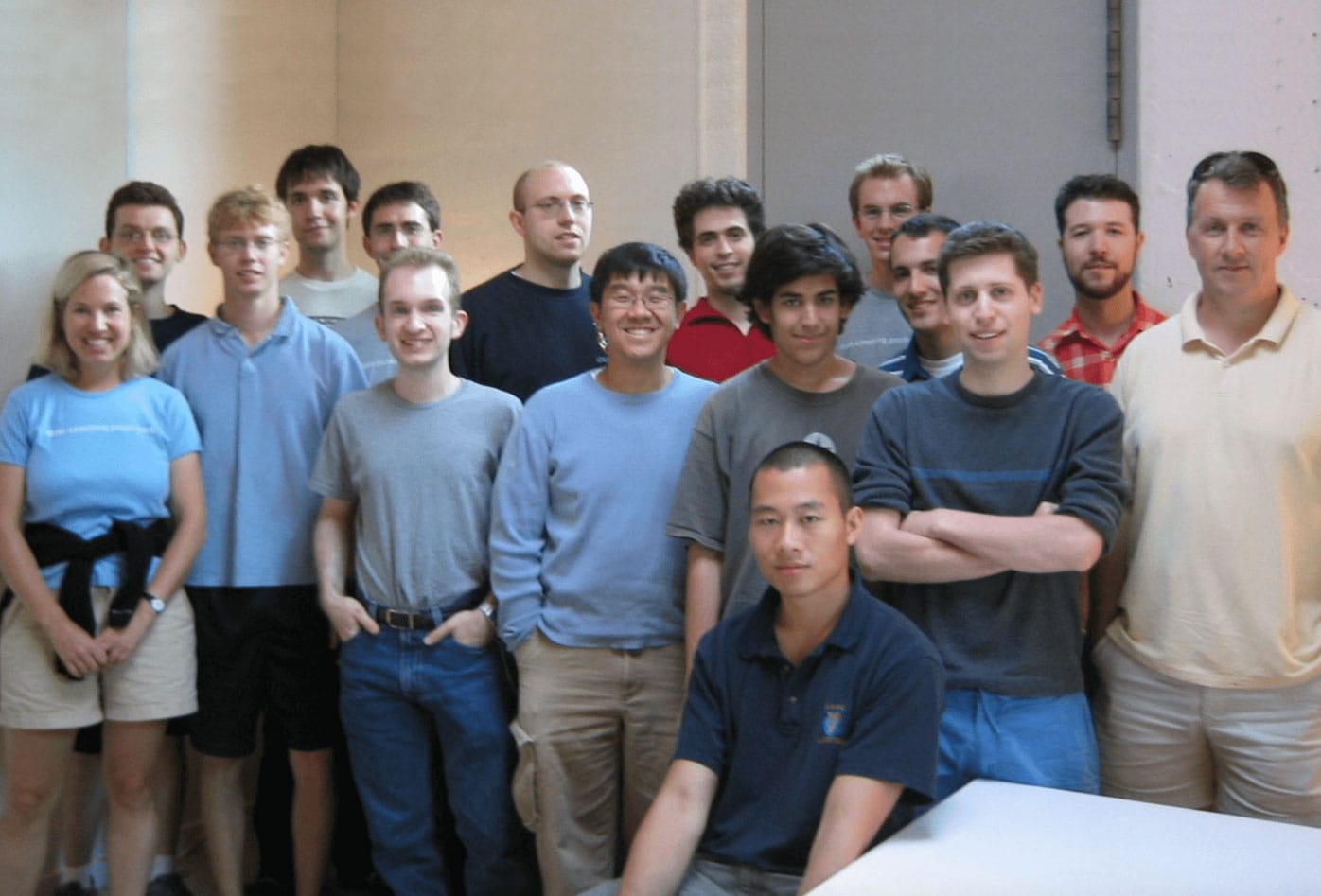
Image via Twitter
The inaugural class of the YCombinator venture capital/startup accelerator was photographed in 2005. YCombinator provides seed money and advice to promising startups in exchange for a percentage of equity, and has participated in the launch of more than 4,000 companies including Airbnb, Coinbase, DoorDash, Twitch, Instacart, and Reddit.
Nearly 20 years on, several of the young men in the photo are household names. One of them—on the right in the front row, arms crossed and standing beside YCombinator founder Paul Graham—is Sam Altman, CEO of the artificial intelligence company OpenAI, maker of the controversial chatbot, ChatGPT. To Altman’s left in the photo is Aaron Swartz, the coder, activist, and writer who died by suicide in January 2013 at the age of 26. Altman was accepted into the first YC cohort for his startup Loopt, and Swartz for Infogami, which would later merge with Reddit.
At the time of his death, Swartz was under indictment for downloading several million documents from the JSTOR online repository. He was a key target of the DOJ’s focus on “computer crime,” and even though JSTOR did not want him charged, Swartz was facing up to 35 years in prison, the victim of what his lawyers later called a publicity-driven case spearheaded by then-U.S. district attorney Carmen Ortiz and assistant attorney Stephen Heymann, among others.
I was fortunate to call Aaron a friend. He made immense contributions in many fields: he was a co-creator of RSS, and an early architect of Creative Commons; he helped write Markdown; he was an effective activist for global digital freedoms, and so much more. As the co-founder of Demand Progress, he was instrumental in defeating SOPA, the blacklist bill that nearly derailed the internet. After this victory he gave a searing speech at the Freedom to Connect conference in 2012, the year before he died.
Make no mistake: The enemies of the freedom to connect have not disappeared. The fire in those politicians’ eyes hasn’t been put out. There are a lot of people, a lot of powerful people, who want to clamp down on the Internet. And to be honest, there aren’t a whole lot who have a vested interest in protecting it from all of that. Even some of the biggest companies, some of the biggest Internet companies, to put it frankly, would benefit from a world in which their little competitors could get censored. We can’t let that happen.
Aaron Swartz understood perfectly the stakes we’re facing now.
Unending money is flowing into A.I. startups, fueled by gobs of data scraped from every corner of the internet; this makes the injustice of Aaron’s prosecution more difficult than ever to believe, or to accept.
OpenAI, which Altman co-founded in 2015, announced in September that its core business would no longer be controlled by a nonprofit board, and that Altman would be given direct equity in the company, adding billions of dollars to his already vast net worth. He is perhaps the highest-profile Silicon Valley potentate hyping his own company as the trailblazer to a future of safety and responsibility, protecting humanity from the threat of A.I.
In related news, OpenAI just closed the largest funding round ever for a private company, raising $6.6 billion on a freakish valuation of $157 billion, putting a company that has only ever operated at a massive loss on par with publicly traded tech firms like Adobe and IBM. OpenAI’s biggest investor by far is Microsoft, which has put $14 billion into the company, turbocharging the A.I. arms race against Amazon, Google, and others.
OpenAI and its rivals have come under some scrutiny in the tech press regarding the staggering sums they’ve been handed, the eye-watering environmental costs of A.I., and increasing uncertainty over the ultimate viability of products like ChatGPT—but as of now, OpenAI is one of the most valuable private companies in the world.
Beyond the governance drama, the explosion in polluting emissions, and the Silicon Valley hype, there are buckets of lawsuits against OpenAI’s reliance on huge datasets to train its commercial A.I. models, many of them accessed by working around original terms of use. Under Altman, the company built Whisper, a tool for transcribing public YouTube videos, into a feed for the GPT-4 model—a legal gray area, given YouTube’s prohibition against the use of its streaming videos for “independent” apps. Sources told the Times that Google didn’t cry foul publicly because it had already trained its own A.I. on YouTube’s video transcripts. But even so, there’s a class action lawsuit by YouTube creators against OpenAI in the works; other lawsuits have been brought by novelists, performers, artists, journalists, and media companies.
It was an alleged violation of JSTOR’s terms of service that set the prosecutors’ attack on Aaron Swartz in motion. However, Swartz’s defense team had been planning to submit testimony that the loophole Swartz was relying on had been known to JSTOR and MIT. Again, JSTOR had reached a settlement with Swartz and informed the prosecutors that they preferred no charges be brought against him.
In November Sam Altman was briefly fired from OpenAI, in part for lying to the company’s board, before quickly returning in response to pressure from employees and investors. As the tech industry watched, agog, Altman completed his jettisoning of OpenAI’s much-touted commitment to safety in A.I. in favor of billions in investment.
Aaron Swartz was threatened with decades in jail for accessing (not disseminating) information; Sam Altman, whose company has accessed—and openly monetized—orders of magnitude more information than Swartz, has polluted and then regurgitated that information to the public, and gathered endless cash reserves from investors with which to fend off lawsuits challenging its commercial ambitions.
Swartz, the tenacious open-source programmer and champion of open access to publicly-funded research; Altman, who has increasingly closed off access to information about his A.I. model.
Swartz, who helped defeat the SOPA/PIPA internet censorship bills; Altman, whose company is bankrolled by Microsoft, which in 2011-2012 supported the restrictive “internet blacklist” bill, PIPA. Swartz, who drew attention to institutional corruption, who co-founded progressive advocacy groups that are still active on behalf of the open web; Altman, who has taken on the role of A.I. evangelist and counts the right-wing libertarian megadonor Peter Thiel among his mentors.
I saw Aaron at an NYC meetup for progressive technologists just two days before he took his life; we made plans to meet at his workspace the following week, to check out an open-source campaigning kit in the works. He was such a formidable inspiration. I remember every detail of the moments when I heard the news of his death and the distraught sensation of flinging myself out of my chair. At his New York City memorial service, Aaron’s close friends shared their grief, unafraid to laugh lovingly at memories together with the crowd in the Great Hall.
The Microsoft executives and punishingly rich VC investors who are bankrolling OpenAI’s moves are hard to reach with appeals to the benefits of open technology. But we can remember, with their every pronouncement, the other path that’s always been available: technology built to be sustainable, tending to trustworthy collective knowledge, and practicing environmental responsibility. The A.I. hyperscalers have not earned that kind of trust.
Since Aaron Swartz’s death, technologists have had chances to develop more open and nonprofit infrastructure, only to see the blitz-commercialized and surveillance-laden services, like Facebook, Microsoft, and Google, force their way ahead time after time. We have missed Aaron’s ideas and his drive to openness. But we can still move to bring openness back to the forefront of the tools we’re building and using every day, before the windows of our world narrow even further.
Did you love it? Subscribe.